



How to budget for a kitchen renovation without missing the real costs
A kitchen renovation budget is rarely just cabinetry and benchtops. Layout changes, electrical upgrades, plumbing, finishes, and builder coordination all play a part.

Kitchen projects often look straightforward at first, but once walls, services, joinery, and appliance selections come into play, budgets can shift quickly. The single biggest mistake we see Gold Coast and Brisbane homeowners make is budgeting for the visible parts — cabinets, benchtop, splashback — while underestimating the trades, structural work, and selections that quietly add up behind the scenes. This guide walks through the real cost drivers so you can plan a realistic budget before you fall in love with a finish you can't fund.
What does a kitchen renovation cost?
As a rough guide for South East Queensland, kitchen renovations tend to fall into three broad bands. These are indicative ranges only — your block, layout, and selections will move the number — but they help frame expectations:
- Budget / cosmetic refresh ($15,000–$30,000): Same footprint, new flat-pack or entry custom cabinetry, laminate or entry stone benchtop, new sink and tapware, basic appliance allowance, and re-using existing services.
- Mid-range custom kitchen ($30,000–$60,000): Fully custom cabinetry, 20–40mm engineered stone, quality tapware, an island, tiled splashback, new lighting and power, and a moderate appliance package.
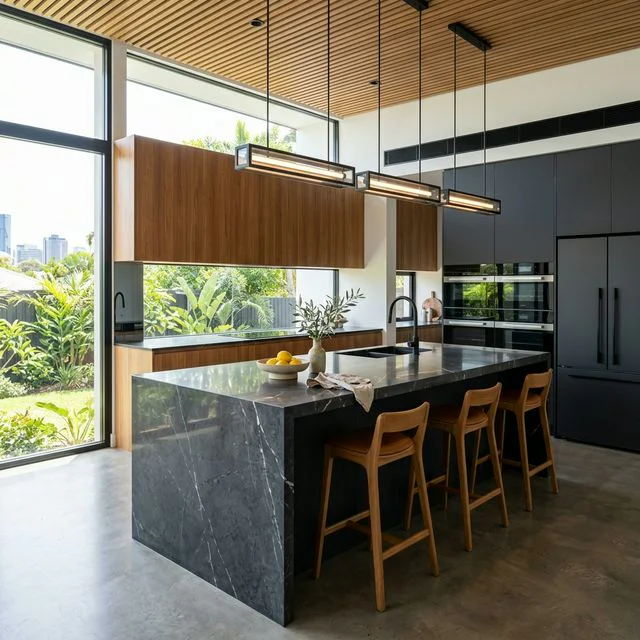
- High-end / structural ($60,000–$120,000+): Wall removal for open-plan living, butler's pantry, integrated premium appliances, stone waterfall ends, custom joinery throughout, and re-routed plumbing and electrical.
Where you land depends far more on scope and selections than on square metres. A small kitchen with high-end stone, integrated appliances, and a structural wall removal can easily cost more than a large kitchen with a straightforward refresh.
Layout changes can reshape the budget
Moving sinks, ovens, island benches, or walls can involve structural work, plumbing, and extra electrical upgrades. The more the layout changes, the more careful the early planning needs to be. Two changes drive cost more than any others:
- Removing a wall to open the kitchen to living and dining. If the wall is load-bearing — common in older Gold Coast brick homes and Brisbane Queenslanders — you'll need an engineered beam, structural support, and ceiling and cornice rectification. This is builder's work and must be approved and certified.
- Relocating the sink, dishwasher, or cooktop. Moving plumbing and gas or power across the room means cutting and re-laying services in the floor or wall, which is labour the finished kitchen never shows but always costs.
If you can keep the major services roughly where they are, you free up budget for the finishes you'll actually see and touch every day.
Joinery and selections drive finish level
Cabinetry and benchtops are usually the largest single line item, and the range within them is enormous:
- Cabinet construction (flat-pack vs custom), door finish (melamine, vinyl-wrap, two-pack, timber), stone type, splashbacks, and hardware all affect cost.
- Engineered stone and porcelain suit our humid climate well; they're non-porous and low-maintenance compared with natural marble.
- Integrated appliances and custom storage (pull-outs, appliance garages, a butler's pantry) improve outcomes, but should be planned from the start, not added later.
- Lighting and power upgrades — LED strips, pendant points, extra circuits for modern appliances — are often underestimated.
The costs people forget
These are the items that turn a "fixed" quote into a variation if they aren't scoped up front:
- Demolition, rubbish removal, and protecting the rest of the home.
- Patching and making good walls, ceilings, and flooring where cabinetry or walls are removed.
- Waterproofing and floor levelling if flooring is replaced.
- Temporary kitchen arrangements while you're without a sink and oven (usually 2–3 weeks).
- Council or certifier approvals where structural changes are involved.
Builder-led planning reduces variation risk
When the builder is involved early, it becomes easier to compare selections that match both the look you want and the spend target you need to stay within. A licensed builder coordinates the cabinetmaker, stonemason, plumber, electrician, and tiler in the right sequence, which avoids the costly re-work that happens when trades are booked piecemeal. Just as importantly, a detailed fixed-price contract with a clear allowance schedule means you know what's included before work starts — the variations that blow kitchen budgets almost always trace back to vague early scoping.
Frequently asked questions
How long does a kitchen renovation take?
Most full kitchen renovations run about 2–4 weeks on site once demolition starts, plus lead time for custom cabinetry and stone templating beforehand. Plan for roughly 2–3 weeks without a working kitchen.
Do I need council approval?
A like-for-like kitchen replacement generally doesn't, but removing structural walls or relocating wet areas can trigger building approval. We manage that process for you.
Where can my budget make the biggest difference?
Spend on the things you touch daily — drawers and hardware, tapware, and a durable benchtop — and keep the layout efficient. Save by retaining the existing footprint and choosing a quality engineered stone over premium natural stone.
If you are planning a renovation, visit our Gold Coast kitchen renovations page or our Brisbane kitchen renovations page to see how we approach layouts, finishes, and builder-led project management. You can also speak directly with Alby for a realistic, no-pressure estimate for your home.
.webp)